

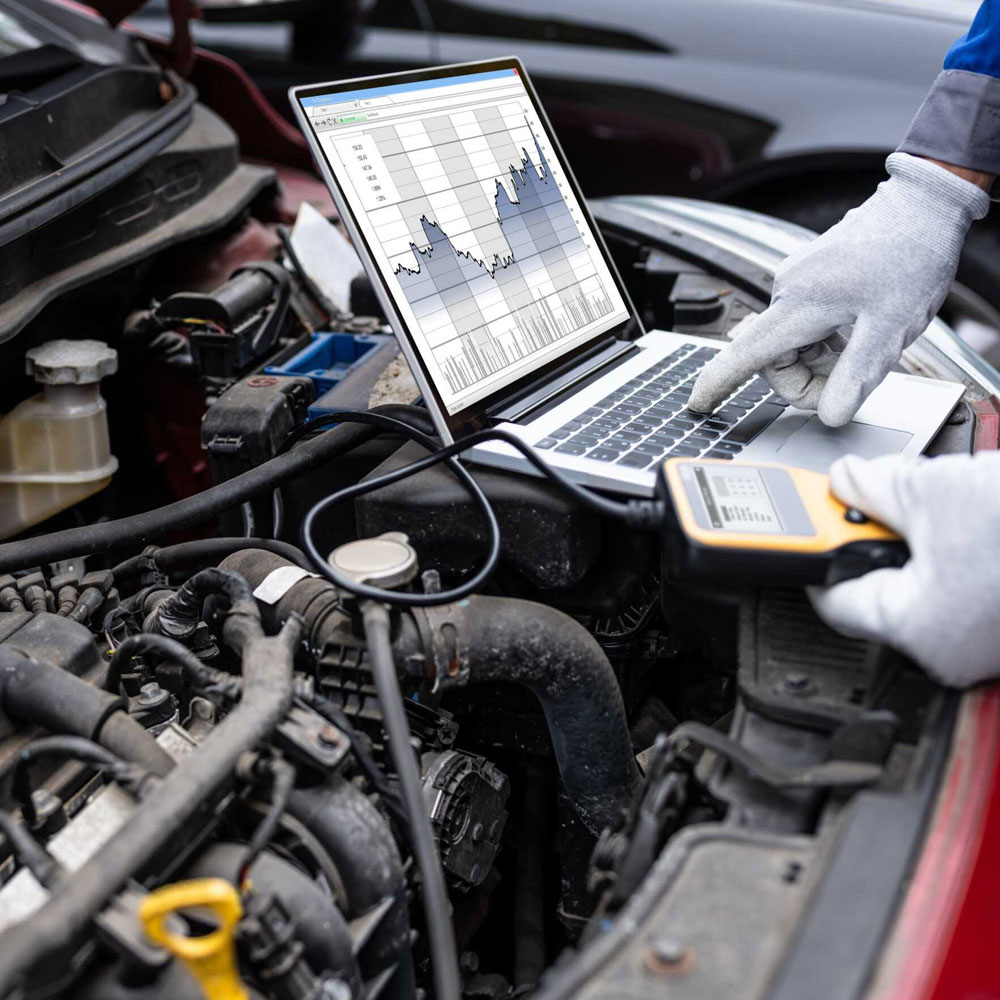
A professional engine diagnostic combines a visual inspection, computer scanning, system testing, and hands-on mechanical evaluation to determine why a vehicle is experiencing problems. Technicians may check warning lights, engine performance, fluids, cooling components, sensors, ignition and fuel systems, and diagnostic trouble codes. The goal is to identify the underlying cause rather than simply treating the symptom, helping determine the right repair.
Key Facts
- An engine diagnostic is more than simply connecting a scanner to the vehicle.
- Diagnostic trouble codes can identify affected systems but do not always identify the failed part.
- Technicians may combine computer diagnostics with visual and mechanical testing.
- Symptoms such as overheating, unusual noises, poor acceleration, or a check-engine light can have multiple causes.
- Finding the root cause before replacing parts can help prevent unnecessary repairs.
- A professional diagnostic can help determine whether an issue requires a minor repair, major engine work, rebuilding, or replacement.
- In Phoenix, Arizona, extreme heat can make cooling-system and engine problems especially important to address promptly.
What Is a Professional Engine Diagnostic?
A professional engine diagnostic is a systematic process used to determine why an engine or related vehicle system is not operating normally.
Modern vehicles use computers, sensors, actuators, and electronically controlled systems to monitor engine operation. When the vehicle detects a problem, it may store a diagnostic trouble code (DTC) and illuminate the check-engine light.
However, a trouble code is usually a starting point for diagnosis—not a final answer.
For example, a code associated with a particular sensor does not automatically mean that replacing the sensor will solve the problem. A technician needs to evaluate the sensor, wiring, connectors, related components, and the conditions that caused the code to appear.
At a professional repair facility, computer-based diagnostics can be combined with hands-on inspection and mechanical testing to develop a more accurate diagnosis.
Why Should You Get an Engine Diagnostic?
Drivers often schedule diagnostics after noticing a warning light or a change in vehicle performance.
Some common reasons include:
- Check-engine light
- Engine knocking or ticking
- Rough idling
- Difficulty starting
- Stalling
- Loss of power
- Poor acceleration
- Reduced fuel economy
- Overheating
- Unusual exhaust behavior
- Oil or coolant leaks
- Excessive oil consumption
- Misfires
- Strange vibrations
The same symptom can have several possible causes. For example, poor acceleration could be related to ignition, fuel delivery, air intake, compression, sensors, or internal engine wear.
That is why replacing parts based only on a symptom or trouble code can be an inefficient approach.
A proper diagnostic process seeks to answer a more important question:
What is actually causing the problem?
What Happens During an Engine Diagnostic?
Although the exact process depends on the vehicle and symptoms, a professional diagnostic commonly follows several stages.
1. The Technician Discusses the Symptoms
Diagnosis often begins before any equipment is connected.
The technician may ask:
- When did the problem begin?
- Does it happen when the engine is cold or warm?
- Does it occur during acceleration?
- Does the vehicle hesitate or stall?
- Are there unusual sounds?
- Has the vehicle recently been serviced?
- Has the check-engine light appeared?
- Has the vehicle overheated?
- Are there fluid leaks?
The information provided by the vehicle owner can help narrow the diagnostic process.
A problem that occurs only during acceleration, for example, may require a different diagnostic approach than an engine that runs poorly at idle.
Why Your Description Matters
Small details can provide valuable clues.
If you notice an intermittent problem, try to remember the conditions under which it occurs. Mentioning whether the issue appears after the vehicle warms up, during highway driving, or while climbing a hill can help the technician reproduce the symptom.
2. A Visual Inspection Is Performed
A diagnostic does not begin and end with a scan tool.
The technician may inspect the engine compartment for obvious problems such as:
- Damaged wiring
- Loose electrical connections
- Fluid leaks
- Worn belts
- Damaged hoses
- Corrosion
- Disconnected components
- Signs of overheating
- Low or contaminated fluids
- Physical damage
This step is important because a mechanical or electrical problem may not always be obvious from a diagnostic code.
A careful inspection can also reveal issues that should be addressed before they cause additional damage.
3. The Vehicle’s Computer Is Scanned
Modern vehicles contain onboard computer systems that monitor many aspects of engine operation.
A professional diagnostic scan can retrieve information such as:
- Diagnostic trouble codes
- System status
- Sensor information
- Engine operating data
- Stored faults
- Pending faults
- Other manufacturer-specific information, depending on the vehicle
The technician then interprets the information in the context of the vehicle’s symptoms.
A Diagnostic Code Does Not Automatically Mean a Part Is Bad
This is one of the most important things vehicle owners should understand.
If a scan identifies a problem associated with a particular system, the technician still needs to determine why that system reported a fault.
For example, an electrical problem, damaged wiring, vacuum leak, failed component, or mechanical issue could potentially trigger a fault associated with a sensor or system.
Professional diagnosis looks beyond the code.
4. Live Data May Be Evaluated
Depending on the vehicle and diagnostic equipment, technicians may examine live data while the engine is operating.
Live data can provide information about how different systems are behaving in real time.
Examples may include:
- Engine temperature
- Engine speed
- Airflow
- Fuel-related data
- Oxygen sensor information
- Throttle position
- Ignition-related information
- Other sensor readings
The technician can compare expected operation with actual readings.
This can help determine whether a problem is electrical, mechanical, fuel-related, air-related, or connected to another system.
5. The Technician Performs Additional Testing
If the initial inspection and scan do not provide enough information, additional tests may be necessary.
Depending on the symptoms, this could involve testing areas such as:
Ignition System
The technician may investigate spark plugs, ignition components, wiring, and related systems when misfires or poor engine performance are present.
Fuel System
Problems with fuel delivery can cause hesitation, rough running, starting problems, and loss of power.
Cooling System
If the vehicle is overheating, technicians may evaluate cooling-system components and look for leaks or other causes of excessive engine temperature.
Air Intake System
Airflow problems can affect combustion and engine performance.
Electrical System
Battery voltage, wiring, connectors, grounds, and other electrical components may need to be evaluated when electronic faults are suspected.
Mechanical Condition
If the symptoms suggest internal engine wear or damage, mechanical testing may be necessary.
6. Mechanical Testing May Be Needed
Computer diagnostics are extremely useful, but they cannot replace mechanical evaluation when internal engine problems are suspected.
Depending on the situation, technicians may perform tests designed to evaluate engine condition.
These tests can help investigate problems involving:
- Cylinder sealing
- Compression
- Internal wear
- Valvetrain operation
- Other mechanical conditions
This becomes especially important when symptoms include persistent misfires, unusual engine noises, excessive oil consumption, or significant loss of power.
Engine House specializes in engine diagnostics as well as engine repair, rebuilding, and remanufacturing, allowing diagnostic findings to be evaluated alongside potential repair options.
7. The Technician Identifies the Root Cause
Once the information has been collected, the technician can determine the most likely cause of the problem.
The goal is not simply to identify a warning code.
The goal is to determine:
What failed, why it failed, and what needs to be done to correct it?
This distinction is particularly important when dealing with expensive components.
A proper diagnosis can help determine whether the vehicle needs:
- A minor repair
- Electrical repair
- Sensor or component replacement
- Cooling-system repair
- Routine maintenance
- Major engine repair
- Engine rebuilding
- Engine replacement
Engine House’s engine service department specifically lists diagnostics, repair, rebuilding, replacement, installation, and performance services.
Engine Diagnostic vs. Simple Computer Scan
These terms are sometimes used interchangeably, but they are not necessarily the same thing.
| Computer Scan | Professional Engine Diagnostic |
|---|---|
| Retrieves stored codes | Interprets codes and symptoms |
| Primarily electronic | Electronic and mechanical |
| Can identify affected systems | Investigates the underlying cause |
| Useful as an initial step | Designed for deeper troubleshooting |
| May not identify the failed component | Uses additional testing when needed |
| Limited without interpretation | Combines technician expertise and test results |
A scan tool is valuable, but the information it provides needs to be interpreted correctly.
How Long Does an Engine Diagnostic Take?
There is no single time that applies to every vehicle.
A straightforward issue may be identified relatively quickly. A complicated intermittent problem can require significantly more testing.
The time depends on factors such as:
- Vehicle make and model
- Age of the vehicle
- Symptoms
- Accessibility of components
- Whether the problem is intermittent
- Number of systems involved
- Diagnostic codes present
- Whether mechanical testing is required
A technician should be able to explain what testing is needed and why additional diagnostic time may be necessary.
How Much Does an Engine Diagnostic Cost?
Diagnostic pricing varies by repair facility, vehicle, problem, and amount of testing required.
A basic scan may be relatively simple, while diagnosing an intermittent electrical or mechanical problem can require substantially more technician time.
Instead of choosing a shop based solely on the lowest diagnostic price, consider the value of an accurate diagnosis.
A correct diagnosis can help prevent a cycle of replacing unrelated parts without solving the underlying problem.
Engine House advertises free estimates and invites customers to contact the shop regarding engine services and repairs.
When Should You Get an Engine Diagnostic?
Consider professional diagnosis if you notice a persistent or unexplained change in vehicle operation.
Check-Engine Light
A check-engine light means the vehicle’s computer has detected a condition that may require attention.
If the light is accompanied by serious symptoms such as severe loss of power, overheating, or unusual engine behavior, professional evaluation becomes especially important.
Unusual Engine Noises
Knocking, ticking, rattling, or other unfamiliar sounds should not be ignored.
Engine House notes that unusual engine noises can be an indication of engine trouble and recommends having the vehicle diagnosed when something does not sound right.
Loss of Power
A noticeable reduction in acceleration or performance can have many causes, from relatively simple problems to significant internal engine wear.
Excessive Oil Consumption
Frequent need to add engine oil may indicate an underlying problem that deserves professional evaluation. Engine House identifies high oil consumption as one possible sign of internal engine wear.
Overheating
Overheating should be treated seriously. Continuing to operate an overheating vehicle can potentially turn a cooling-system problem into more extensive engine damage.
Why Professional Diagnosis Matters in Phoenix
Phoenix drivers deal with extreme summer temperatures that can put additional stress on vehicle cooling systems and engines.
A vehicle that already has a marginal cooling-system component may have more difficulty maintaining proper operating temperature during periods of extreme heat.
That makes symptoms such as overheating, coolant loss, warning lights, or unusual engine behavior worth addressing promptly.
Engine House serves Phoenix and surrounding communities including El Mirage, Peoria, Glendale, Scottsdale, Goodyear, and Paradise Valley.
Common Mistakes to Avoid
Ignoring the Check-Engine Light
A warning light does not always indicate a catastrophic problem, but ignoring it can allow an underlying issue to continue.
Better approach: Have the vehicle evaluated and determine what triggered the warning.
Replacing Parts Based Only on a Code
A diagnostic code does not necessarily mean the corresponding component has failed.
Better approach: Let a technician verify the cause before replacing parts.
Continuing to Drive With Serious Symptoms
Severe overheating, major loss of power, unusual engine noises, or other significant symptoms deserve prompt attention.
Better approach: Stop operating the vehicle when continued driving could create a safety or mechanical risk and seek professional assistance.
Assuming Every Problem Requires an Engine Replacement
Not every engine problem means the entire engine needs to be replaced.
Better approach: Obtain a professional diagnosis first. Depending on the condition, repair, rebuilding, remanufacturing, or replacement may each be appropriate.
Expert Tips for a Better Engine Diagnostic
Describe the Problem Clearly
Tell the technician exactly what you have noticed, including when the symptom occurs.
Don’t Clear Codes Before the Appointment
Clearing diagnostic codes can remove useful information from the vehicle’s computer.
Mention Recent Repairs
A recent repair or maintenance service may provide an important diagnostic clue.
Pay Attention to Warning Signs
Changes in engine noise, performance, temperature, oil consumption, or starting behavior can help identify developing problems.
Ask What the Diagnosis Found
A professional shop should be able to explain the problem in understandable terms and discuss the recommended next steps.
Frequently Asked Questions
What is included in an engine diagnostic?
A professional engine diagnostic may include a symptom review, visual inspection, computer scan, diagnostic trouble-code analysis, live-data evaluation, and additional electrical or mechanical testing when necessary.
Is an engine diagnostic the same as a code scan?
No. A code scan retrieves information from the vehicle’s computer, while a professional diagnostic uses those results along with symptoms, inspection, and additional testing to identify the underlying cause.
Why is my check-engine light on?
A check-engine light can be triggered by many different conditions involving the engine, emissions, fuel, ignition, sensors, electrical systems, or other components. A diagnostic is needed to determine the specific cause.
Can a diagnostic tell me if my engine needs to be rebuilt?
It can help determine whether symptoms and test results point toward internal engine damage or significant wear. Additional mechanical inspection may be necessary before recommending a rebuild.
How long does an engine diagnostic take?
The time varies. Simple problems may be identified quickly, while intermittent electrical problems or suspected internal engine issues can require more extensive testing.
Should I drive with a check-engine light on?
It depends on the vehicle’s symptoms and warning-light behavior. If the vehicle is overheating, running severely, losing power, or exhibiting other serious symptoms, continued driving may worsen the problem. Professional evaluation is the safest approach.
Can an engine diagnostic find an overheating problem?
A diagnostic can help identify potential causes, but overheating may require both computer-based and physical inspection of the cooling system and engine.
Does a diagnostic mean my engine needs to be replaced?
No. Many engine-related problems can be repaired without replacing the entire engine. A proper diagnosis helps determine whether repair, rebuilding, remanufacturing, or replacement makes the most sense.
Why does my car run rough but have no check-engine light?
Not every problem immediately triggers a warning light. Mechanical, fuel, ignition, air-intake, or other issues can sometimes produce drivability symptoms without an obvious dashboard warning.
Where can I get engine diagnostics in Phoenix?
Engine House Inc. provides professional engine diagnostics along with engine repair, rebuilding, remanufacturing, and other automotive services in Phoenix and surrounding communities.
Why Choose Engine House Inc.?
Engine House Inc. is a locally owned and operated full-service auto repair shop in Phoenix specializing in engine repair, rebuilding, remanufacturing, diagnostics, and automotive machine-shop services. The company says it has served the community for more than four decades and works on most makes and models, including domestic and Asian vehicles.
The shop’s listed credentials include AAA approval, ASE certification, BBB accreditation, and AERA affiliation.
Engine House also operates an automotive machine shop capable of services involving cylinder heads, engine blocks, crankshafts, cylinders, pistons, connecting rods, resurfacing, boring, honing, balancing, and other engine-machine work.
That combination can be particularly useful when an engine diagnostic identifies a problem that requires more than a basic component replacement.
Call to Action
Don’t guess at the cause of an engine problem or replace parts without knowing what failed.
If your vehicle has a check-engine light, unusual engine noise, overheating, loss of power, excessive oil consumption, or another unexplained problem, contact Engine House Inc. for professional engine diagnostics in Phoenix.
A proper diagnosis can give you a clearer understanding of the problem and help you make an informed decision about the next repair.


Leave A Comment