
Arizona’s extreme summer heat places added stress on your vehicle’s engine and cooling system. High temperatures can make an existing coolant leak, weak hose, aging belt, low fluid level, or cooling-system problem worse. Regular maintenance and prompt attention to overheating, coolant loss, unusual noises, warning lights, or poor performance can help prevent minor problems from becoming major engine repairs.
Key Facts
- Phoenix-area heat can expose vehicles to demanding operating conditions, especially during extended summer driving.
- The cooling system must continuously move heat away from the engine to maintain a safe operating temperature.
- Low coolant, leaks, restricted airflow, failing components, and other mechanical problems can contribute to overheating.
- Repeated overheating can cause serious engine damage, including problems involving the cylinder head, head gasket, or engine block.
- A temperature warning, persistent overheating, or other serious symptoms should not be ignored.
- Preventive maintenance, including fluid checks and factory-recommended service, can help identify problems before they become expensive repairs.
- Engine House Inc. provides auto repair, engine diagnostics, engine rebuilding, and related services for drivers in Phoenix and surrounding communities.
What Is an Automotive Cooling System?
An automotive cooling system is the group of components responsible for controlling engine temperature. It typically includes the radiator, coolant, hoses, thermostat, water pump, cooling fans, expansion or overflow tank, and related passages.
As the engine operates, combustion creates substantial heat. Coolant circulates through passages in and around the engine, absorbs heat, and carries it to the radiator, where that heat can be released before the coolant returns to the engine.
This system is especially important in a hot climate such as Phoenix. When a cooling-system component is damaged or not operating correctly, the engine may be unable to shed heat effectively.
Why Arizona Heat Is Hard on Car Engines
Arizona’s climate creates conditions that can be demanding for vehicles. The issue isn’t simply that the outside temperature is high. Heat affects several systems simultaneously, while long periods of driving, traffic, towing, air-conditioning use, and stop-and-go conditions can add additional load.
A healthy vehicle is designed to operate within a specific temperature range. However, an existing maintenance problem can become much more noticeable when ambient temperatures rise.
For example, a small coolant leak may not cause obvious symptoms during mild weather. During a very hot Phoenix afternoon, the same vehicle may struggle to maintain its normal operating temperature.
Heat Can Expose Existing Problems
Extreme temperatures don’t necessarily cause every cooling-system failure. Instead, they can make weaknesses more apparent.
Common examples include:
- Aging radiator or heater hoses
- Low coolant
- Coolant leaks
- A malfunctioning thermostat
- Cooling fan problems
- Water pump issues
- Restricted radiator airflow
- Worn belts
- Poorly maintained fluids
- Existing engine problems
Engine House Inc. specifically offers auto maintenance services that include fluid flushes, belts and hoses, factory maintenance, diagnostics, and other vehicle services.
How the Cooling System Protects Your Engine
The cooling system performs several important jobs while your vehicle is running.
1. Coolant Absorbs Engine Heat
Coolant circulates through passages in the engine and absorbs heat produced during combustion.
If coolant levels become too low, the system may not be able to transfer heat effectively.
2. The Water Pump Circulates Coolant
The water pump keeps coolant moving through the engine and radiator.
A failing pump can interfere with circulation and contribute to overheating.
3. The Thermostat Regulates Temperature
The thermostat controls coolant flow based on engine temperature.
If it becomes stuck or fails, coolant may not circulate as intended.
4. The Radiator Releases Heat
The radiator transfers heat from the coolant to the surrounding air.
Restricted airflow, damage, contamination, or other radiator problems can reduce cooling efficiency.
5. Cooling Fans Help During Low-Speed Driving
Fans are particularly important when natural airflow through the radiator is limited, such as when the vehicle is sitting in traffic.
A fan problem may become much more noticeable during hot weather and stop-and-go driving.
Signs Arizona Heat May Be Affecting Your Engine
Knowing the warning signs can help you address a problem before it becomes a major repair.
1. Rising Temperature Gauge
Your dashboard temperature gauge provides important information about engine operating temperature.
If the gauge moves significantly higher than its normal position, don’t assume the problem will correct itself.
A rising temperature can indicate a cooling-system issue that requires professional diagnosis.
2. Overheating
An overheating engine is one of the clearest warning signs of a cooling problem.
Engine House notes that overheating can be associated with several underlying issues, including coolant loss and serious engine problems.
Repeated overheating should never be treated as a normal consequence of Arizona weather.
3. Low Coolant
If your coolant level repeatedly drops, there may be a leak or another problem that needs investigation.
Adding coolant may temporarily restore the level, but it doesn’t address the reason the coolant disappeared.
4. Coolant Under the Vehicle
A puddle or visible fluid leak can indicate a cooling-system problem.
However, identifying the exact source isn’t always simple. Coolant can travel along components before reaching the ground.
5. Unusual Engine Noises
Knocking, rattling, ticking, or other unusual sounds should be investigated.
Engine House recommends professional diagnostics when unusual noises occur because they can indicate underlying engine problems.
6. White Exhaust Smoke
Persistent white exhaust smoke can indicate that coolant is entering areas where it shouldn’t.
Engine House identifies white exhaust smoke as one possible warning sign of a cracked engine block or other serious engine issue.
7. Poor Engine Performance
Heat-related problems don’t always begin with an obvious temperature warning.
Loss of power, rough running, poor acceleration, or unusual operation can also indicate an underlying mechanical problem.
What Happens When an Engine Overheats?
An engine operating above its intended temperature can experience increasing stress.
The severity depends on the cause, how hot the engine becomes, how long it remains overheated, and the vehicle’s condition.
Potential consequences can include:
- Damaged gaskets
- Cylinder-head problems
- Coolant leaks
- Distorted components
- Lubrication problems
- Engine-performance issues
- Damage to the engine block
- The need for extensive engine repair
Engine House’s experience with engine rebuilding and remanufacturing is particularly relevant when overheating has contributed to serious internal engine damage. The company’s Phoenix facility works with engine blocks, cylinder heads, crankshafts, cylinders, pistons, and related components.
Why Repeated Overheating Is Especially Concerning
One overheating event doesn’t automatically mean an engine needs to be rebuilt.
However, continuing to drive a vehicle that repeatedly overheats can allow a relatively manageable cooling-system problem to develop into more serious engine damage.
That is why diagnosis matters.
Arizona Heat and Engine Oil
Cooling isn’t the only concern during hot weather.
Engine oil lubricates moving components and helps manage heat inside the engine. Oil that is old, contaminated, incorrect for the vehicle, or present at an inadequate level may not provide the protection your engine needs.
This is one reason following your manufacturer’s maintenance schedule matters.
Engine House provides conventional, semi-synthetic, and synthetic oil changes as part of its maintenance services, along with tune-up services such as spark-plug and filter replacement.
Check Your Oil Regularly
Drivers should follow the vehicle manufacturer’s instructions for checking oil level and changing oil.
If your vehicle consumes oil or you notice an unexplained drop in oil level, have the cause investigated rather than repeatedly topping it off without determining why the level is falling.
How Arizona Drivers Can Reduce Heat-Related Engine Problems
Preventive maintenance is one of the best ways to reduce the risk of being stranded by an avoidable mechanical problem.
Follow the Factory Maintenance Schedule
Your vehicle manufacturer’s maintenance schedule is a useful starting point.
Depending on the vehicle, maintenance may include:
- Oil changes
- Coolant service
- Filter replacement
- Belt inspections
- Hose inspections
- Spark-plug replacement
- Transmission service
- Battery testing
- General vehicle inspections
Engine House provides factory auto maintenance and inspections for many Asian and domestic vehicles.
Pay Attention to Fluid Levels
Don’t wait until a warning light appears to think about your vehicle’s fluids.
Follow the manufacturer’s recommendations for checking coolant, engine oil, transmission fluid, and other fluids.
If a level repeatedly drops, look for the cause.
Inspect Belts and Hoses
Rubber components can deteriorate over time.
During routine maintenance, belts and hoses should be checked for signs of wear, damage, deterioration, or leakage.
Engine House lists belts and hoses among its auto-maintenance services.
Don’t Ignore Warning Lights
Dashboard warnings are designed to alert you to potential problems.
A flashing check-engine light deserves particular attention. Engine House recommends addressing a flashing check-engine light promptly because continuing to drive under those conditions can cause additional damage.
What to Do If Your Car Overheats in Arizona
If your vehicle begins overheating, prioritize safety.
Step 1: Take the Situation Seriously
Don’t assume the vehicle can safely continue because you are only a few minutes from home.
Step 2: Find a Safe Place to Stop
Pull over somewhere safe as soon as practical.
Step 3: Turn the Engine Off
Allow the vehicle to cool rather than continuing to operate an overheating engine.
Step 4: Avoid Opening a Hot Cooling System
Never remove a radiator cap or attempt to open a pressurized cooling system while it is hot. Hot coolant and steam can cause serious burns.
Step 5: Arrange Professional Diagnosis
Once the vehicle is safe, have the underlying problem properly diagnosed.
The goal isn’t simply to make the temperature drop. The goal is to determine why the vehicle overheated in the first place.
Common Arizona Engine and Cooling-System Problems
| Problem | Possible Symptoms | Why It Matters |
|---|---|---|
| Low coolant | Temperature rises, coolant warning, visible loss | Reduced ability to transfer heat |
| Coolant leak | Puddle, low reservoir level, overheating | Can lead to inadequate cooling |
| Thermostat problem | Temperature fluctuations or overheating | Can disrupt coolant flow |
| Water pump issue | Overheating, coolant problems, unusual noises | Can reduce coolant circulation |
| Cooling fan problem | Overheating, especially in traffic | Reduces airflow through radiator |
| Radiator restriction or damage | Elevated temperature | Can reduce heat transfer |
| Head-gasket problem | Overheating, coolant loss, white exhaust | May cause serious engine damage |
| Cracked engine block | Coolant loss, overheating, performance issues | May require major engine repair |
These symptoms can overlap. A temperature problem doesn’t identify the failed component by itself, which is why professional diagnostics are important.
When Is Engine Repair Necessary?
Not every overheating problem requires an engine rebuild.
Sometimes the underlying issue is a cooling-system component that can be repaired or replaced without major internal engine work.
However, prolonged overheating can contribute to internal damage.
Engine House provides engine diagnostics, repairs, rebuilding, remanufacturing, replacement, installation, and engine-related machine-shop services.
Engine Repair vs. Engine Rebuilding
A repair typically addresses a specific failed component or problem.
An engine rebuild is more extensive. Engine House explains that rebuilding can involve removing and disassembling the engine, inspecting components, restoring usable parts, replacing damaged components, machining cylinders or other parts when necessary, and reassembling the engine.
The appropriate solution depends on the actual condition of the engine.
Common Mistakes Arizona Drivers Make
Ignoring a Rising Temperature Gauge
A vehicle doesn’t have to reach a complete breakdown before a cooling problem deserves attention.
Better approach: Investigate unusual temperature behavior early.
Driving With Low Coolant
Low coolant can reduce the system’s ability to control engine temperature.
Better approach: Check the level according to the manufacturer’s instructions and investigate unexplained coolant loss.
Treating Coolant as a Permanent Fix
Adding coolant may restore the level temporarily, but it doesn’t repair a leak.
Better approach: Have recurring coolant loss diagnosed.
Waiting for a Major Breakdown
Some engine problems provide warning signs first.
Better approach: Pay attention to overheating, unusual noises, smoke, fluid loss, warning lights, and performance changes.
Assuming Arizona Heat Is the Only Cause
Hot weather can contribute to difficult operating conditions, but it doesn’t automatically explain every overheating problem.
Better approach: Have the vehicle professionally diagnosed rather than guessing at the cause.
Expert Tips for Phoenix-Area Drivers
Tip 1: Check Your Vehicle Before Summer Trips
Before a long trip, make sure routine maintenance is current and inspect for obvious fluid leaks or other warning signs.
Tip 2: Don’t Ignore Small Changes
A new smell, unusual noise, temperature fluctuation, or change in performance may be worth investigating.
Tip 3: Keep Maintenance Records
Maintenance records help you and your technician understand what services have already been completed.
Tip 4: Use the Correct Fluids
Always use fluids that meet your vehicle manufacturer’s specifications.
Tip 5: Address Recurring Problems
If your vehicle repeatedly loses coolant or overheats, don’t keep treating the symptom without finding the cause.
Tip 6: Consider the Vehicle’s Entire Condition
A cooling problem may exist alongside other age-related maintenance needs. A comprehensive inspection can help identify issues before they become unexpected breakdowns.
Frequently Asked Questions
Can Arizona heat cause a car to overheat?
Arizona heat can place additional demands on a vehicle, but overheating usually indicates that the cooling system or another component is unable to manage engine heat properly. Low coolant, leaks, cooling-fan problems, thermostat issues, restricted airflow, and internal engine problems can all contribute.
How often should I check my coolant in Arizona?
Follow your vehicle manufacturer’s recommendations for checking coolant. If the coolant level repeatedly drops, don’t simply refill it indefinitely. Recurring coolant loss should be professionally inspected to determine whether a leak or another problem exists.
What temperature is too hot for a car engine?
There isn’t one universal temperature that applies to every vehicle. Engines are designed to operate within a manufacturer-specified temperature range. The dashboard temperature gauge, warning lights, and vehicle-specific information are more useful than relying on one generic number.
Can low coolant damage an engine?
Yes. Low coolant can reduce the cooling system’s ability to remove heat from the engine. If overheating continues, serious engine damage can occur.
Why does my car overheat in traffic but not on the highway?
This pattern can point toward an airflow or cooling-fan problem because vehicles receive less natural airflow through the radiator at low speeds. However, several other problems can produce similar symptoms, so diagnosis is necessary.
Is white smoke from my exhaust related to overheating?
It can be. Persistent white exhaust smoke may indicate coolant entering the combustion process, which can be associated with problems such as a failed head gasket or cracked engine block.
Can overheating mean I need an engine rebuild?
Not necessarily. Some overheating problems are caused by repairable cooling-system components. However, severe or prolonged overheating can cause internal engine damage that may require rebuilding or replacement.
Should I drive my car if the temperature warning comes on?
An overheating warning should be treated seriously. Continuing to drive can increase the risk of engine damage. Safely stop the vehicle and allow it to cool rather than continuing to operate an overheating engine.
What does an engine diagnostic service check?
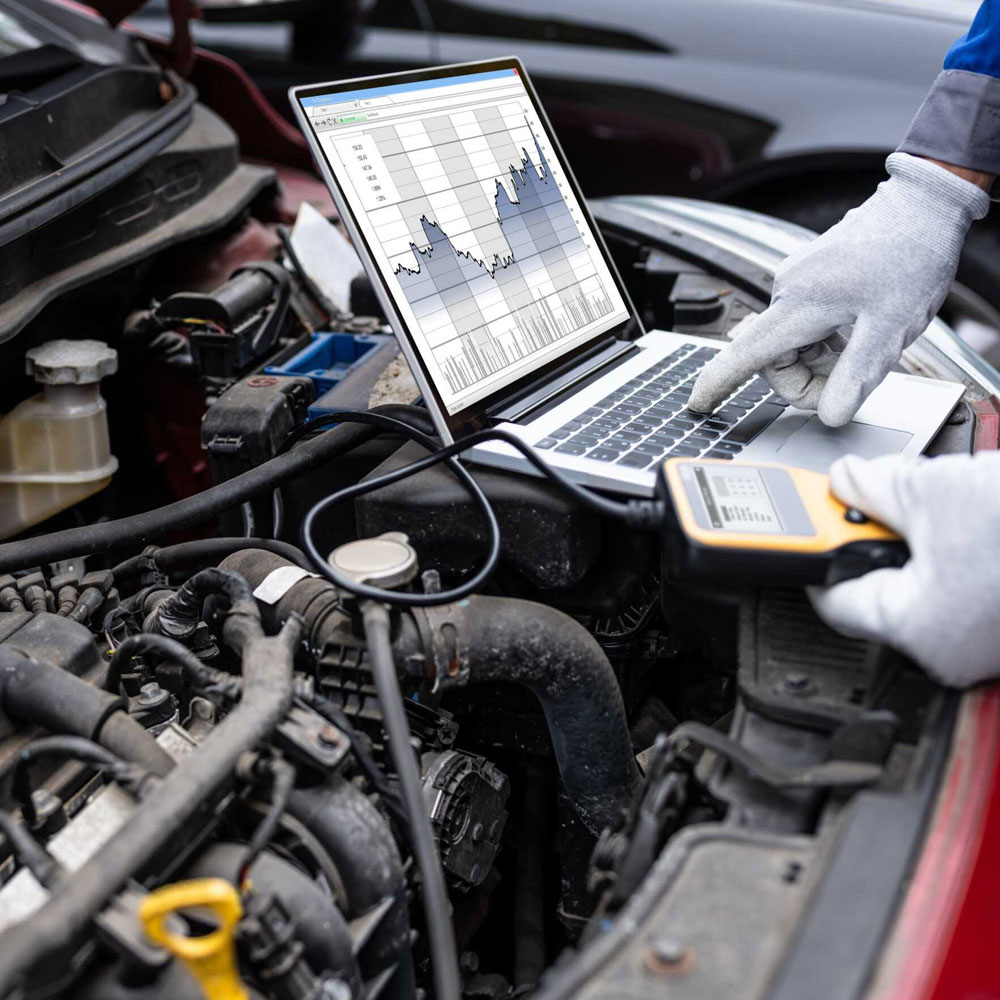
Professional diagnostics are used to identify the underlying cause of an engine problem. Engine House combines technician experience with modern diagnostic equipment to investigate symptoms such as overheating, unusual noises, leaks, poor performance, and warning lights.
Does Engine House service vehicles outside Phoenix?
Yes. Engine House lists Phoenix, El Mirage, Peoria, Glendale, Scottsdale, Goodyear, and Paradise Valley among its service areas.
Why Choose Engine House Inc.?
When an Arizona vehicle develops an engine or cooling-system problem, accurate diagnosis matters. Engine House Inc. is a locally owned and operated full-service auto repair shop in Phoenix with decades of experience working on cars, trucks, and marine engines. The company specializes in engine repair, rebuilding, remanufacturing, diagnostics, and machine-shop services.
Engine House also provides broader maintenance and repair services, including factory maintenance, oil changes, fluid services, belts and hoses, transmission work, brakes, suspension, steering, and computer diagnostics.
The shop is AAA approved and displays BBB, ASE, and AERA credentials on its website.
For drivers in Phoenix and surrounding communities, that combination of general automotive service and specialized engine expertise can be valuable when a cooling-system issue turns out to involve a larger engine problem.
Contact us
Don’t let Arizona heat turn a small cooling-system problem into major engine damage.
If your vehicle is overheating, losing coolant, making unusual engine noises, showing warning lights, or running differently than normal, have the problem diagnosed before it becomes more serious.


Leave A Comment